During militia fighters from the notorious Rapid Support Forces (RSF) seizing control of the biggest urban center in western Sudan – perpetrating mass executions, sexual assaults and targeted violence with weapons supplied by the UAE – the NBA’s yearly in-season tournament commenced on October 31st, proudly sponsored by the identical Middle Eastern nation.
A Deepening Alliance Amidst Conflict
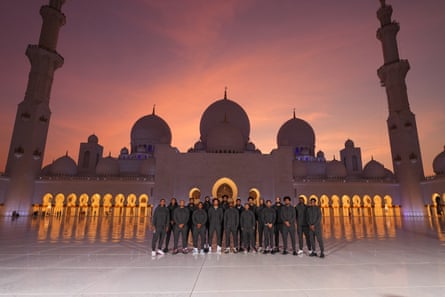
The tournament represents the most visible example of the league's growing relationship with the UAE – a partnership that encompasses annual preseason games in Abu Dhabi, a valuable agreement with Emirates airlines, and plans for a new NBA Global Academy at a university campus in Abu Dhabi.
More significant agreements are expected to follow. It is suggested the NBA is pursuing Emirati investment in a new NBA-branded European league, which might begin as early as 2027.
This flourishing partnership has already paid dividends for both sides: the NBA has secured a deep-pocketed backer, while the UAE has identified a willing partner to help further normalize its autocratic regime, especially as it faces allegations of fueling genocide in Sudan.
The UAE's Questionable Human Rights Profile
Beneath its image of opulence and modernity, the UAE enforces silence with an iron fist. Critics and human rights advocates are imprisoned on arbitrary charges, punished for daring to oppose the state. The nation’s economic prosperity rests on migrant laborers, who make up a large percentage of the workforce and who toil with limited protections and minimal options against exploitation.
Its role reaches more violent conflicts beyond its borders. A mounting collection of evidence links the UAE authorities to Sudan’s RSF, the armed group behind many of the horrors and war crimes being committed in Sudan.
The Tragedy of Sudan's Civil War
Sudan’s civil war began in April 2023, when hostilities between the Sudanese military and the RSF plunged the country into a state of all out war. Cities such as the city of Khartoum were became battlefields, devastating critical infrastructure and causing the world’s largest refugee emergency.
As the civil war approaches its third year, death toll estimates differ significantly. Aid agencies have recorded many thousands of fatalities. Separate studies claim the toll may be significantly higher, with many more dead as a direct result the fighting.
This war has also been characterized by appalling acts such as rape, torture, mutilation and ethnic cleansing. This was vividly demonstrated when a major city in Darfur was captured by the RSF. The fighters began a mass killing spree so extreme that evidence of the blood could be seen from space.
From the beginning of the war, the UAE have helped fund and arm the RSF, effectively sponsoring the its war crimes. The military government have even filed a complaint to the world court alleging the UAE of genocidal complicity. In spite of substantial evidence to the contrary, the UAE continues to deny any participation in the war.
Sportswashing and Global Apathy
Recently, the UAE has hosted high-profile tournaments in cricket, basketball, UFC, and Formula 1. Next come golf and a padel tournaments. With rare exceptions, teams and leagues have made little effort to dissociate from the controversial nation.
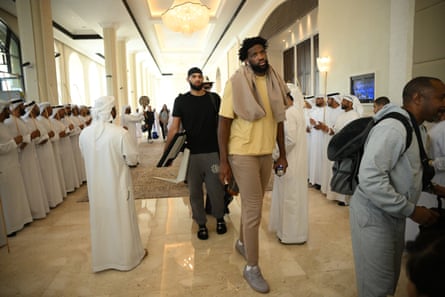
The UAE has gained significantly from the athletic community's apathy. Investments in soccer teams, cricket, and various projects have rebranded the ruling family as savvy investors rather than authoritarian rulers.
However, the continuing slaughter in Darfur has provoked some rare critical attention for the UAE. Some football fans have even condemned their club’s owner for the alleged involvement in the Sudan conflict.
A Call for Accountability
The silence around the NBA’s recent deal with the UAE is concerning. One of the few to criticize the NBA for normalizing the UAE’s role is an NGO that champions the rights of displaced people. They stated: “The tournament could bring out the best in everyone. Yet, it’s being used to sportswash crimes supported by the UAE in Sudan. The NBA must not allow itself to be a tool in the UAE’s rehabilitation of famine + genocide.”
Nevertheless, sports teams and leagues seldom end profitable agreements without pushback. At a European soccer giant's annual meeting, an campaigner who previously led a successful campaign to end a similar partnership with a different Gulf state was heckled by members after raising concerns about a new agreement with the UAE’s airline.
The activist accused the club of “propping up the reputation of questionable governments” and cautioned that the deal risked causing “lasting damage to the reputation of our club”. For his remarks, he was openly mocked by the organization's leadership.
This incident further emphasizes how successful the UAE's brand management efforts have been, making criticism seem unwelcome even within renowned sports institutions.
A Concluding Reflection
One should not expect the NBA, which has ties with other authoritarian governments, to speak out the UAE’s human rights record … but imagine if they did. Imagine if mass atrocities, violations of international law and systemic repression were red lines for international athletic organizations.


